Choosing the right wheelchair cushions can feel overwhelming. With so many types, materials, and features out there, it's easy to get lost. But here's the thing: the right cushion makes a huge difference. It helps prevent pressure sores, keeps you comfortable all day, and supports your posture. This guide breaks down everything you need to know. We'll cover cushion types, key factors to think about, top options, and how to keep your cushion in great shape. By the end, you'll know exactly what to look for.
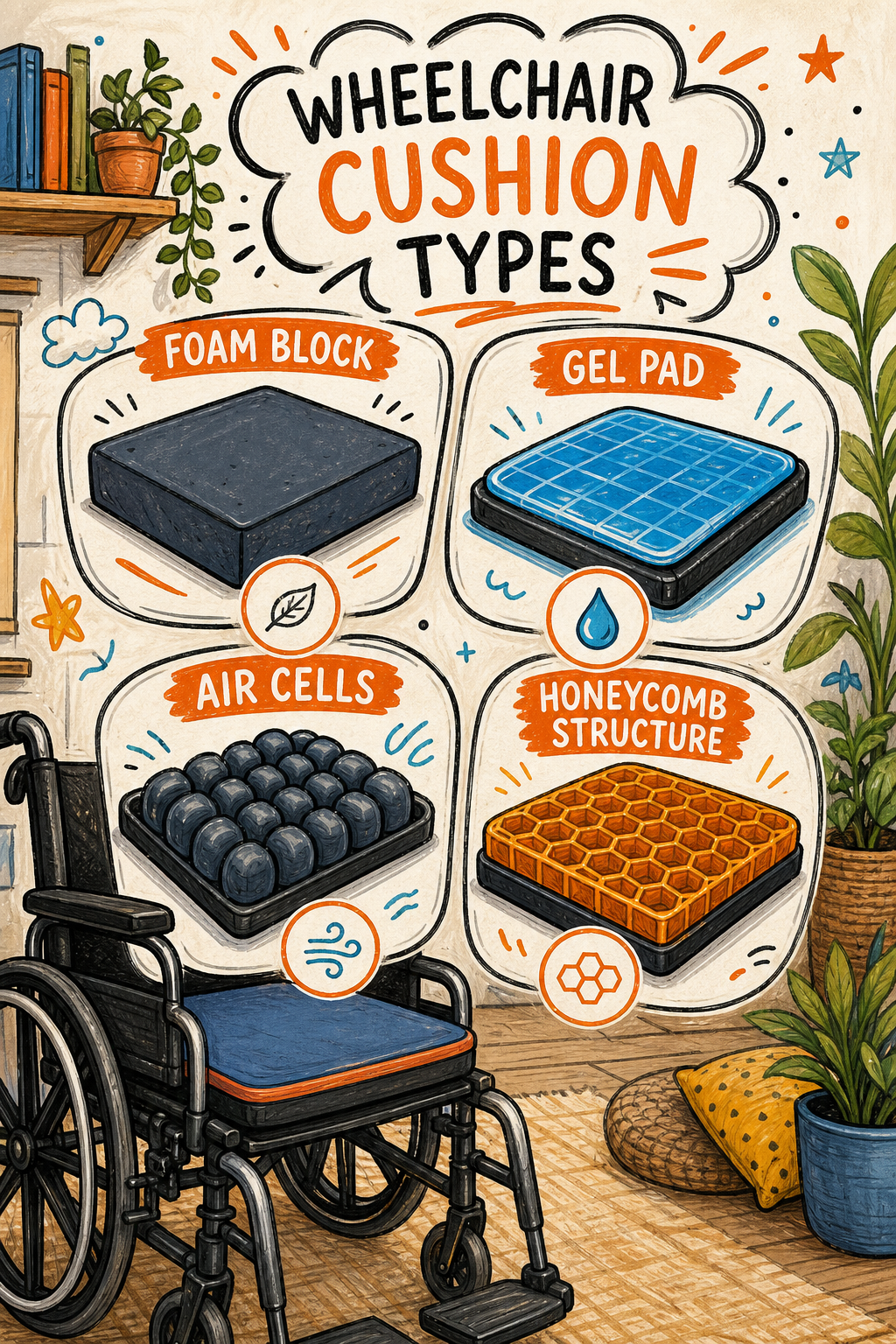
Wheelchair cushions come in several main types. Each one works differently to support your body and relieve pressure. Knowing the differences helps you pick the right one for your needs.
Foam Cushions
Let’s face it—foam cushions are the go‑to for many wheelchair users. They’re lightweight, affordable, and give firm support. For short‑term or low‑risk use, a basic foam pad works fine. Modern foam has stepped up: memory foam molds to your shape, and some models add a cooling‑gel layer to keep you from overheating. According to the National Center for Assistive Technology (NCAT), foam cushions remain popular because they’re simple, cost‑effective, and easy to clean—just a quick wipe with a damp cloth. Want the full specs? Check out NCAT’s guide here.
Gel Cushions
Gel cushions use a gel layer or gel bladders to spread your weight more evenly. They feel softer than foam and stay cool. That's a big plus if you sit for long hours. The gel moves with you, reducing pressure on bony spots like your tailbone. Gel cushions are heavier than foam, but they offer better pressure relief. They're a good middle ground between basic foam and high-tech air cushions.
Air Cushions
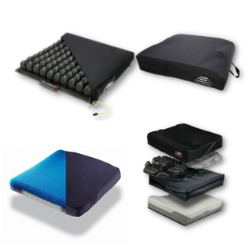
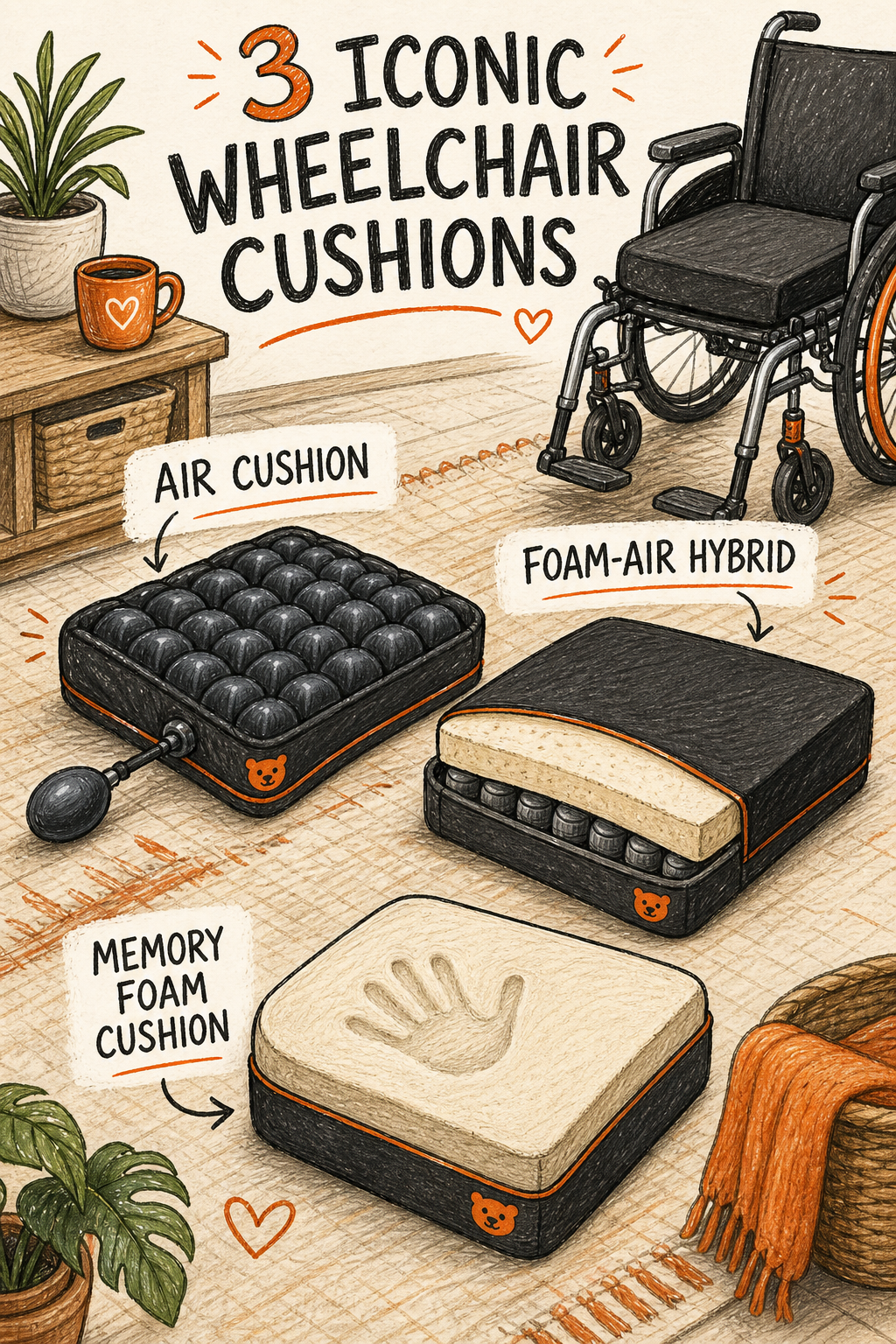
Air cushions use adjustable air cells that you can inflate or deflate to control firmness. They provide excellent pressure redistribution. The air moves as you shift, constantly adapting to your body. This makes them ideal for people at high risk of pressure sores. But they need regular checking. Some models, like the a high-profile dual compartment cushion, let you adjust each side separately. That's great for correcting pelvic tilt. Air cushions require more upkeep than foam or gel, but the pressure relief can be worth it.
Honeycomb Cushions
Honeycomb cushions have a breathable open-cell structure. Think of a beehive, but with flexible material. They promote airflow, keeping you cool and dry. They're lightweight and easy to clean. The honeycomb design spreads weight evenly while reducing heat buildup. These are a usable choice for daily use, especially if you tend to sweat.
Hybrid Cushions
Hybrid cushions combine two or more materials. For example, foam plus gel, or foam plus air. They aim to give you the best of both worlds: the stability of foam with the pressure relief of gel or air. Hybrids are often the top pick for all-day comfort. They balance support and immersion without too much maintenance.
Key Takeaway: Your cushion type should match your pressure risk, sitting time, and activity level. Foam and gel work for low-to-moderate risk; air and hybrids are better for high-risk users.
Key Factors to Consider When Choosing a Cushion
Choosing a wheelchair cushion isn't just about picking the softest one. Several factors matter. Let's walk through them one by one.
Pressure Redistribution
The main job of a cushion is to spread your weight evenly and reduce pressure on sensitive areas. Research published in Frontiers in Bioengineering and Biotechnology explains that cushion performance can be classified by how well it redistributes pressure. They found that only two out of ten cushions tested met the highest level of performance. That shows not all cushions are equal. If you're at risk for pressure ulcers, look for a cushion with advanced pressure redistribution, like air or hybrid models.
Seat Size and Fit
A cushion that's too small creates edge pressure. Too big, and you might slide forward or feel unstable. Measure your wheelchair seat width and depth. Then pick a cushion that matches. Most brands offer multiple sizes. For example, our cushion collection at Wheelchairbearing.com comes in different dimensions to fit various chairs. Also think about cushion thickness. Thicker cushions provide more immersion but raise your seat height. Make sure your feet still touch the footrests comfortably.
Posture and Stability
Your cushion should help you sit upright with good posture. Look for features like contoured shapes, anti-thrust fronts (to prevent sliding), and lateral supports. These help keep your pelvis stable and your spine aligned. Positioning cushions with molded contours are great for users with neurological conditions or those who need extra stability.
Weight Capacity
Many cushions don't list a weight limit. In our research, only 4% of products provided a weight capacity figure. That's a problem, especially for bariatric users. If you need a higher weight capacity, look for cushions specifically labeled bariatric. They are wider and built stronger, to handle the weight without sacrificing the benefits of the cushion.
Maintenance and Durability
Some cushions are easier to care for than others. Foam and honeycomb are low maintenance. Air cushions need regular inflation checks. Gel cushions can be heavy but are generally durable. Check if the cover is removable and machine washable. That makes cleaning much easier.
Heat and Moisture
If you tend to get hot, consider breathable materials like honeycomb or gel. Some gel cushions have cooling properties. Air cushions also allow airflow. Avoid thick foam without ventilation if heat is a concern.
Pro Tip: Before buying, check the cushion's warranty and return policy. A trial period lets you test the cushion at home to see if it really works for you.
Top Cushion Options from Wheelchair Bearings
Wheelchair Bearings">
Now let's look at specific cushions you can trust. Wheelchair Bearings carries a range of top-quality options. Here are some of the best picks for different needs.
Air Cushion with Dual Compartments
Let’s face it—Wheelchair Bearings doesn’t make cushions, but we’ve got the Roho air cushion you’ve been hunting for. It’s built with interconnected air cells so you sink in and pressure spreads evenly. The dual‑compartment design lets you fine‑tune each side, perfect for correcting pelvic obliquity or limiting side‑to‑side movement. We love the Roho “Mid‑Profile Dual‑Compartment” because it’s easy to inflate, holds pressure well, and fits most frames. Keep an eye on inflation—check it weekly for optimal relief. Need more details? Learn more about the Roho air cushion.
Foam-Air Hybrid Cushion with Pressure Adjustment
This hybrid cushion combines foam and air in a smart way. It features a pressure setting valve that takes the guesswork out of adjustment. It provides superior pressure distribution and postural support. It's great for users with symmetric positioning needs, like spinal cord injury or multiple sclerosis. The cushion comes in several base styles: contoured, positioning wedge, and lateral positioning base. That gives you flexibility based on your posture requirements.
Contoured Foam Cushion with Gel Top
This cushion is known for its contoured foam with a gel top. It provides moderate pressure relief and good stability. It's a popular choice for active users who need a balance of comfort and positioning. The gel layer helps with heat dissipation, and the foam base supports the pelvis. It's available in multiple sizes to fit most wheelchairs. Explore the Ride Design Java Cushion.
How to Properly Maintain Your Wheelchair Cushion
Let’s face it—keeping your cushion clean is the secret to longer life and better performance. Whether you have a gel, foam, or air cushion, we recommend wiping it down after each use, spot‑cleaning stains with mild soap, and giving it a deep clean every few weeks. Follow the steps in the video for the right method for your cushion type.
Air Cushions
For air cushions, close the air valve before cleaning. Use a mild detergent and a soft brush to clean the neoprene rubber. Rinse with fresh water and let air dry. Never put an air cushion in the washing machine or dryer. Check the manufacturer's instructions for disinfection. Some air cushions can handle a mild bleach solution, but not all. Also, inspect for leaks periodically. A small patch can fix most punctures.
Foam Cushions
After removing the cover, wipe the foam with a damp cloth. Use only water, no soap or bleach. Never submerge foam in water. Blot dry with a towel, then let it air dry completely before putting the cover back on. If your foam cushion has detachable positioning components, take a photo before removing them so you can reassemble correctly.
Gel and Hybrid Cushions
Clean the cushion with mild soap and water. Wipe dry with a towel and air dry. The cover can usually be machine washed on gentle cycle and tumble dried on low. Check the label. For hybrid cushions, follow the care instructions for the most delicate material.
Regular maintenance not only keeps your cushion hygienic but also ensures it continues to provide the right support. A worn-out cushion can lose its pressure-relieving properties.
Pro Tip: Set a monthly reminder to check your cushion for signs of wear. Look for cracks, flattened areas, or leaks. Early detection can prevent skin issues.
Expert Tips for First-Time Cushion Buyers
If this is your first time buying a wheelchair cushion, here are some usable tips to get it right the first time.
Start with a Professional Assessment
If possible, work with a physical therapist or occupational therapist. They can measure your seat, assess your postural needs, and recommend cushion types. They may even have samples you can try. Many insurance plans require a prescription anyway. Getting professional input reduces the guesswork.
Measure Twice, Buy Once
Measure your wheelchair seat width and depth. Also measure your thigh length and hip width. Your cushion should be at least as wide as your hips and slightly less deep than your seat to keep you from sliding forward. Write down these numbers and compare them to product specs.
Consider Your Daily Activities
Do you transfer often? Play sports? Spend most of the day sitting? Active users may prefer a firmer, low-profile cushion that doesn't add height. Long-sitters need more pressure relief. If you do wheelchair sports, look for a cushion with good stability and minimal weight.
Don't Forget the Backrest
Let’s face it—your cushion and backrest should work together, not against you. A supportive backrest keeps your posture on point and eases pressure on the seat. If yours feels worn, saggy, or just uncomfortable, it’s time for a swap. At Wheelchair Bearings we’ve stocked a variety of backrest replacement cushions that pair perfectly with our seat cushions. Pick the right fit, and you’ll be back to rolling in comfort in no time.
FAQ
How long does a wheelchair cushion last?
Most wheelchair cushions last 2 to 5 years. Foam cushions may compress faster, especially with daily use. Air cushions can last longer if you maintain them well and patch leaks. Keep an eye out for flat spots, cracks, or loss of support. Replace your cushion when you notice these signs to avoid skin problems.
Can I use a wheelchair cushion on a regular chair?
Yes, many wheelchair cushions work on regular chairs too. But keep in mind that wheelchair cushions are designed to fit specific seat widths. If you use it on a wider office chair, it may shift around. Some cushions have non-slip bottoms. For best results, match the cushion size to the chair.
How do I know if my cushion needs more air?
For air cushions, you should be able to sit in the cushion and feel your pelvis sink in slightly. If you bottom out (feel the hard base), you need more air. If the cushion feels too firm and doesn't contour, release some air. Check the manufacturer's instructions for the right inflation level. Watch this quick video guide for a visual demo.
Is a more expensive cushion always better?
Not always. Price often reflects advanced features like adjustable air cells, pressure mapping, or premium materials. But a high-end cushion may not suit your needs if you have low pressure risk and good mobility. Spend based on your specific requirements: comfort, skin protection, and stability. The best cushion is the one that fits your body and lifestyle.
What is the best cushion for pressure sores?
For existing pressure sores or high risk, alternating pressure or multi-zone air cushions are often recommended. They provide dynamic pressure relief that shifts support points. However, always consult a healthcare professional for wound care. They can stage the sore and recommend the appropriate cushion type.
Can I wash my wheelchair cushion in a washing machine?
Most cushion covers are the only part you can toss in the washer. We recommend a gentle cycle, mild detergent, and low‑heat drying. The foam, gel, or air core should stay out of the machine and be spot‑cleaned instead. That said, cushions like the VicAir and Stimulite are an exception; their entire cushion can be machine‑washed on a gentle cycle (check the label).
What if my cushion slides forward on the seat?
Sliding can happen if the cushion is too small or the seat surface is smooth. Look for cushions with non-slip bottoms or use a non-slip mat between the cushion and the seat. Also check if your cushion has a front contour (anti-thrust) that helps keep you back. Adjusting your footrests and seat depth can also reduce sliding, if your chair is adjustable.
Do I need a prescription for a wheelchair cushion?
For over-the-counter purchase, no. But if you want insurance reimbursement, you usually need a prescription from a doctor. Medicare and many private insurers require a face-to-face exam and a written order. Check with your supplier and insurer for specific documentation.
Conclusion
Choosing the right wheelchair cushion is a big decision. It affects your comfort, skin health, and daily function. We've covered the main types: foam, gel, air, honeycomb, and hybrid. Each has its strengths. We've looked at key factors like pressure relief, fit, posture, and maintenance. And we've highlighted some top options from leading manufacturers in the industry.
Remember to measure your seat, assess your risk level, and think about your daily activities. Don't be afraid to test a cushion before committing. And keep up with regular cleaning and inspections to make your cushion last.
At Wheelchair Bearings, we're here to help. We carry a wide selection of wheelchair cushions and parts. Whether you need a simple foam cushion or a high-end air system, we have options to fit your needs. Improve your time, do your research, and pick the cushion that lets you sit comfortably and safely every day.
This article is for informational and educational purposes only and is not medical advice. It is not intended to diagnose, treat, cure, or prevent any condition, and it should not be used as a substitute for professional medical advice, diagnosis, or treatment. Always seek guidance from a qualified healthcare provider with any questions you may have regarding a medical condition.

 Wheelchair Bearings">